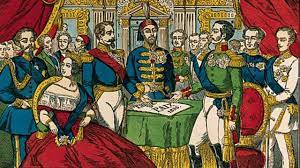
The President of Turkey constantly makes glorious references to Ottoman Empire. In these references, he mostly focuses on Ottoman Empire “being the leader of Islamic world”. But is this the only face of Ottoman Empire? Is it only about religious motivations?
Here I want to show the attempts of renovation in Ottoman Empire in 19th century. Apparently, this very important period is mostly overlooked.
Personally I find this period interesting because I believe that today’s Republican institutions was rooted in this reform era which we call Tanzimat.
Tanzimat period is the key to the most extensive Westernisation experience of the Ottoman Empire.
Tanzimat Reform Era starts with the proclamation of Imperial Edict of Gülhane in 1839 and ends with the declaration of short-lived 1st Constitutional Monarchy in 1876.
Gülhane is the name of a park in Istanbul. The rescript was read to the public in this very park. When I was a child it was a beautiful place. Used to go with my grandparents. I don’t know if it is still that pretty or has it changed like everything else in Istanbul?

Tanzimat, in Ottoman Turkish, stands for reorganisation. Between 1839 and 1876, Ottoman Empire was subjected to many reforms. Instead of perceiving the Tanzimat as an integrated modernisation project, we should analyse it as a bumpy negotiation process. At the centre of this process were the Ottoman bureaucrat elites, who differed in themselves, and on the other side were the European forces with various expectations and demands, local conservative opposition and various Muslim and non-Muslim actors.
In November 1839, the Imperial Edict of Gülhane was proclaimed among the turbulence of a military and diplomatic crisis which could have had vital consequences for the Ottoman Empire. The edict received support from European states with the emphasis it placed on the freedom of the people and on the rights granted to the non-Muslim actors of the Empire.
It is undeniable that Mustafa Reşit Pasha, the architect of the Gülhane Rescript and the foreign minister of the period, took advantage of his close relations with the British politicians in order to use this document as an effective diplomatic tool. It would be a great mistake to assume that the edict came out with the pressure of the European states; because the intellectual and political background of the Tanzimat initiative was formed within the framework of the European-inspired secular-centralist transformations of the Mahmut II era. In this period, the Ottoman political life was shaped by well-educated, European cultured, pro-reform bureaucrats. These reformist bureaucrats, who can be called Tanzimat elites, constitute the undisputed power centre of the Ottoman administration until the reign of Abdülhamit II.
The most important renovation that came with the Edict was; “guaranteeing the life, property and honour of all Ottoman subjects by laws” which indicated the appearance of an entirely new concept of society. An important step was taken by the absolute authority to recognize the rights of the non-Muslim people. The new expansions of liberties were in fact a radical deviation from the Sharia provisions, because the principle of equality was the basis of a secular state order in which non-Muslims shared the same rights as the privileged Muslim population.
With Gülhane Rescript, the first steps were taken to create a secular and inclusive Ottoman identity. Traditionally, “Ottomanism” was a limited and distinguished identity that only described the belonging to the ruling class of the dynasty. Along with the Gülhane Rescript, Ottomanism was being expanded as a common upper identity determined by the civil adherence of every citizen to the state and dynasty regardless of their ethnic and religious origin. This dynastic nationalism was the last remedy of old-fashioned multicultural empires to survive in 19th century Europe, in which ethnic nationalism and nation-states were rapidly spreading.
Despite all the steps taken in terms of equality in the Tanzimat period, the fact that Muslims abandoned their privileged status and shared the same rights with non-Muslims would be a very difficult idea to internalize even for the most latitudinarian bureaucrats.
Although the idea of a fully egalitarian order could not overcome the serious obstacles in practice, during the Tanzimat period, many non-Muslim officials found the chance to reach high ranks in Ottoman rule.
Tanzimat was a period of transformation led by a distinguished ruling group for the prosperity of the subjects and the progress of the state. The state made several attempts to promote scientific production. As first step to establish a modern university, a science board was created, primarily inspired by the French Academy of Sciences.
The first newspaper in Ottoman Turkish was already published in Mahmud II period. However, the main breakthrough of Ottoman journalism was in the 1860s. In this context, while the new intellectual journalist type of Tanzimat took over the mission of enlightening the public, the concept of public opinion was started to taken into consideration for the first time in the Ottoman Empire. The short era of press freedom ended with an order in 1867. Following the order, which brought serious restrictions to the contents of the publications, many newspapers were shot down and the intellectuals, such as Namık Kemal, were deported. The Tanzimat elite couldn’t tolerate the different and critical stance of the generation that they raised.
It is necessary to understand the Tanzimat period with its opposition and contradictions. It would be wrong to think of a linear development model linking Mustafa Reşit to Mustafa Kemal. Although the foundation of many Republican institutions was laid with the Tanzimat, it should not be forgotten that the roots of modern Islamic opposition also extend to the same period.
Contrary to the general opinion, reforms in the Western sense did not start with the proclamation of the Republic of Turkey. As can be seen, the foundations of secularism were laid during the Tanzimat period and the generation that proclaimed the Republic was educated by the Tanzimat intellectuals.
So next time when you hear someone saying the revolutions of 1920s were sudden and rootless, you know that they were actually the result of a years long process with ups and downs.
P.S.: Of course this westernisation showed itself in art too. With the spread of western pleasures during the Tanzimat period, some bureaucrats and bourgeoisie from the Ottoman palace began to form their own painting collections. Moreover, many exhibitions were held in the Ottoman capital, even though the number of the audience was limited. Interest in the plastic arts of Western origin began to revive, and it brought diversification along. Perhaps the most recognizable example in this field is Osman Hamdi Bey. He described the East by going beyond the prejudices of the West. He reflected the East with its modest families and its scholars in contrast of the West’s cliché description of the East with violence, lust and poverty.



 food and politics
Leave a comment