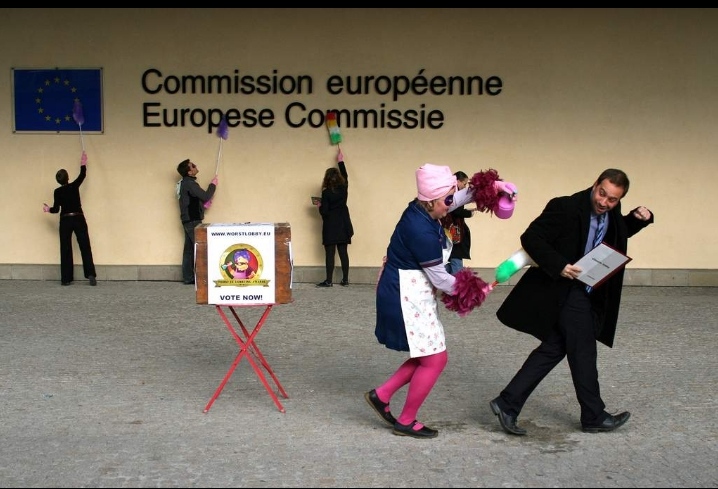
Can you track lobbying in Brussels?
The purpose of lobbying is to evaluate the issues in the political agenda in terms of the interest group represented, to do research, to produce knowledge and to transform them into action.
Brussels (fun and not so ugly capital of Europe) hosts around 30,000 lobbies which makes it the second most active lobbying capital after Washington DC.
Such large number of lobbies can make it difficult to keep track of the lobbying activities which can lead to the question of transparency of these activities. In democracies, even though there are scandals from time to time (personally I enjoy it when there is a scandalous leak), lobbying generally functions with relatively transparent rules.
Ideally, as a citizen, we should be able to follow lobbying activities and watch how effective lobbying is on the issues that concern all of us, like climate change, human right’s issues etc.
To ensure the transparency for EU lobbying, the EU has made several attempts. In 2017 a Joint Transparency Register has been instituted and so far 11,814 lobbies are registered.
We have no doubt that lobbyists affect the decision-making process and we assume that the politicians act upon the interest of these pressure groups. But is there a way to keep track of decisions of politicians which are supposedly shaped by lobbyists?
In this digital era, since everything has become online, transparency of lobbying activities and thus transparency of political decisions have been ensured online too through data collection. There is one effective platform: EU Integrity Watch. It has been launched in 2014 by Transparency International EU. The name, at first, may sound a bit “EUish” but for everyone, it is easy to use since it is only a website where you can apply lots of filters according to what you are searching for.
To what extend does this digital platform ensure transparent lobbying?
For us it is not always easy to access such data. With the principle of open data and open software, EU Integrity Watch collects the data for you so that you can search for information on the activities of Members of the European Parliament (MEPs) and meetings between European Commission and lobbying organisations. Well, of course, if you are not an EU nerd, you don’t need to follow every single meeting. Look for whatever interests you.
EU Integrity Watch is also an active citizen platform that allows citizen participation; you can always report a misinformation or an updated information.
Lobby negotiations between lobbyists and government officials are generally a cause of concern for us, especially during election times, since it is us who pay the bill. This concern creates a scepticism towards democracy. A scepticism that we need to overcome when there are Eurosceptic populistic movements all around Europe that threaten the Union.
To empower pluralistic democracy, EU Integrity Watch is a tool for everyone (that I can recommend and I’m not great with using the Internet) who wants to know what is happening behind closed doors and wants to be informed about what lobbies are doing for our interests or if they are going against them.
At the end lobbiysts are the ones who contribute to the decision making process of politicians, the decisions that eventually touch our lives. It is important to track down the lobbying activities since they are our voices in the heart of Europe.
What about the unregistered lobbies and their “shady” activities?
I said that there are around 30,000 lobbies in Brussels. But only 11,841 of them are registered, not even half. Since the Transparency Register is not compulsory, it is impossible to keep track of activities of all the lobbies in Brussels. The shady, hidden activities of some ambiguous lobbies risk damaging public interest since lobbying takes place at the margins of democracy, or even in the shadows.
It creates a transparency problem when citizens are not well informed about the influencers and their effect on decision making process.
I think most of us have no doubt that, especially corporative lobbies, like banking lobbies, oil lobbies, have become masters of digital lobbying and have a significant influence on the decision makers. Because of the lack of transparency, citizens can’t have the proof that the decisions taken by the EU institutions reflect their interests. Eventually this is what reduces our trust to the EU institutions and by doing so threatens our democracy.
What should happen next?
In 2014 when Jean-Claude Juncker became the President of the European Commission, he put the transparency of lobbying in his political agenda. He also promised a mandatory register.
However, the mandatory register never became a reality because of the unsuccessful negotiations between three EU institutions: the Parliament, the Commission and the Council.
Why couldn’t Juncker’s Commission establish the compulsory registration in five years? That is another topic. Of course it is not as easy as it sounds, with the complex system of the EU. But, even though there were some significant steps taken, we can’t deny that there is still a big transparency issue when it comes to lobbying.
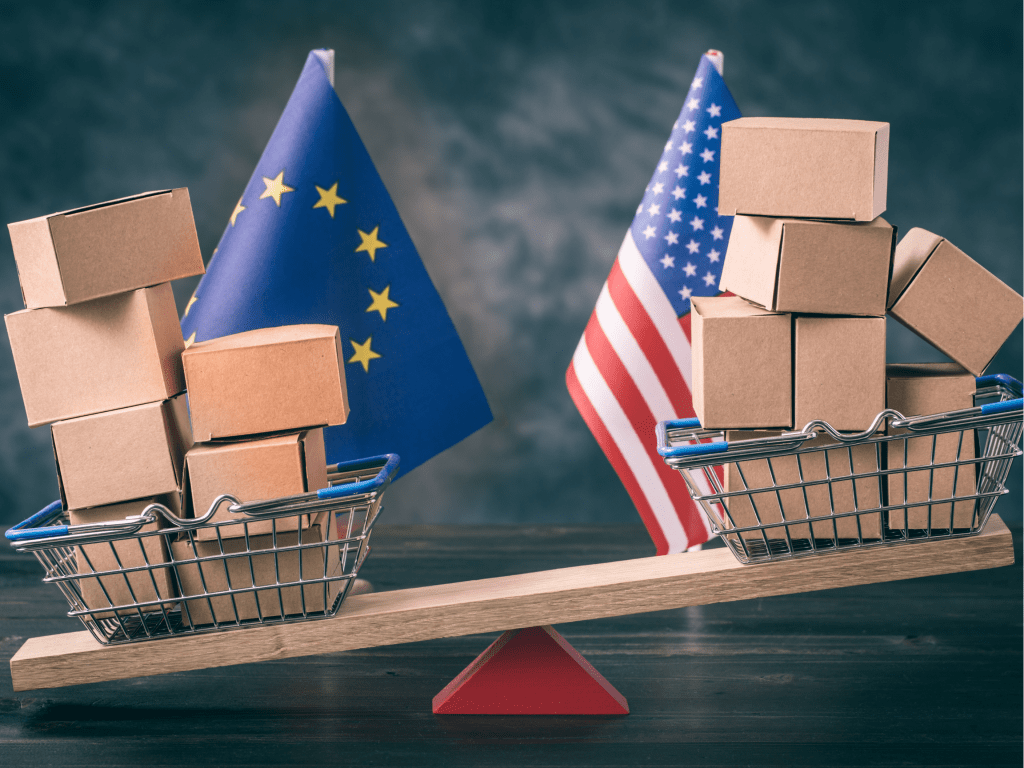
The EU fails us in terms of democracy as long as the transparency of lobbying activities are not established. Maybe “fail” is a strong term but I use it maybe because I expect more from the EU. Pretty much all of us can agree that the EU is the champion of regulations, coming up with new regulations, about trade, about climate etc. Even the big companies from China or from US try to be compatible with these regulations. Then, if we are so good at regulating, why couldn’t we regulate lobbying in a democratic frame until this day?
With 2019’s European elections I have high hopes on establishment of a mandatory register system. The executive and legislative branches of the EU are looking to find an appropriate and fair solution to the transparency issue. First action to take to tackle this issue, the Transparency Register must be mandatory for all organisations conducting lobbying activities.
This is not only crucial for us the citizens but also for the decision makers. They need to know who the lobbyists are and they should know their goals, clients and sources of funding through a reliable data. They are the ones who are taking decisions in behalf of us and, ideally, for our interests. I say ideally because, even the so called “best system” democracy never ever works perfectly (what is perfect anyway?).
The transparency can be ensured by a reliable online monitoring platform that collects data from all the registered lobbies. A platform that is always updated and working for our benefit. To increase the trust of citizens to the EU institutions and its politicians we should benefit from open data and open source.
Pressure groups seeking to influence political decisions will always exist and are a reality of democracy because they strengthen the participatory democracy. As citizens of a democratic Europe we deserve to have access to all information that influence the decision making process.

 food and politics
Leave a comment