The world in 2024 is a pressure cooker. Trump back in the White House, the wars in Ukraine, Palestine, and Lebanon, and escalating trade and energy dilemmas have converged, testing the EU’s resilience and resolve.
Europe finds itself at a crossroads, facing a global landscape that demands both intellectual and strategic recalibration. The question is not only how the EU will react but also how it can preserve its core values of stability, human rights, and sustainability in a world shifting beneath its feet.
Geopolitical Realities and Humanitarian Crises
The wars raging in Ukraine, Palestine and Lebanon present moral and strategic dilemmas for Europe. These wars, at times, show the EU’s longstanding commitment to human rights and international law, but also highlight the limitations of soft power in a world where brute force and aggression often prevail. Leaders like Josep Borrell have articulated Europe’s moral obligation to support justice, but the nature of modern warfare — with its disregard for civilian lives and international norms — places the EU in a challenging position.
The humanitarian cost of these wars is immense, affecting millions of lives and raising questions about Europe’s ability to remain a bastion of stability and ethical leadership. In this context, Europe’s diplomatic influence and its emphasis on humanitarian standards become crucial pillars, but the effectiveness of these tools is increasingly strained. As the EU navigates its role, it is clear that this is not only a test of Europe’s values but also of its willingness to advocate for a rules-based order in an environment that often rewards its opposite.
A Shifting Transatlantic Relationship
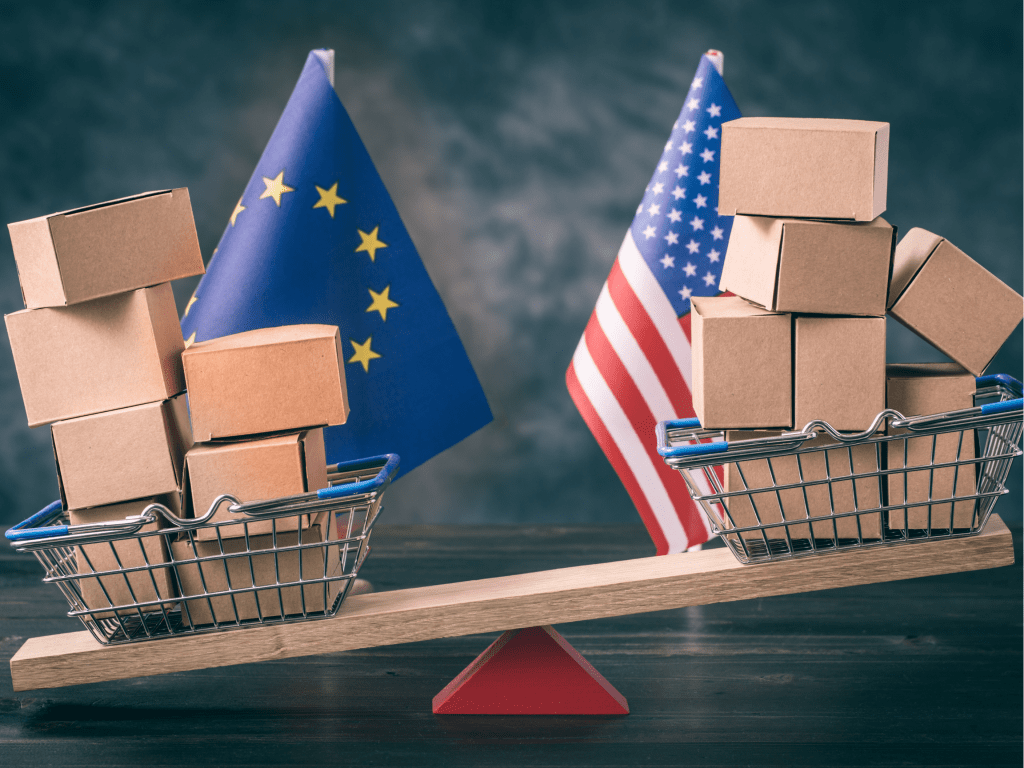
With Trump’s return to office, Europe faces a renewed wave of “America First” policies. The U.S. is likely to impose tariffs and revive trade barriers to protect American industries, creating potential economic friction with the EU. What’s likely? U.S.-China tensions may divert Chinese goods into European markets, challenging EU industries to compete in an environment where low-cost imports may proliferate.
This transatlantic friction reflects a broader trend: the decline of unconditional alliances and the rise of transactional politics. For the EU, this signals a need to consider its strategic interests more independently, navigating a landscape where economic alliances can be as unpredictable as they are essential. Europe’s ability to balance its economic relations with both the U.S. and China will be a defining factor in its continued relevance on the world stage.
Energy Independence and Europe’s Climate Dilemma
The EU’s commitment to a green transition has been a cornerstone of its policy agenda. However, energy independence is proving to be one of the most pressing challenges as Europe grapples with fluctuating global prices and a renewed American focus on energy self-sufficiency. The war in Ukraine has starkly pointed out Europe’s vulnerability to external energy supplies, reinforcing the urgent need for diversification and sustainable energy strategies.
Yet, as energy prices impact EU competitiveness, Europe faces a delicate balancing act. Can it simultaneously pursue its climate goals and maintain economic stability? Europe’s answer to this question could redefine its global role as either a leader in sustainable innovation or a region that struggles to balance its ideals with its economic imperatives. The EU’s capacity to lead by example in developing resilient, green energy infrastructure will determine how it navigates this pivotal moment.
Climate Leadership Under Pressure
Europe’s climate agenda faces an added layer of complexity as other global powers, including the U.S., lean into short-term economic gains over environmental commitments. Europe has positioned itself as a climate leader, but the pressure to remain competitive while pursuing ambitious climate goals has intensified. In an era where sustainability is as much a strategic advantage as a moral imperative, Europe’s climate policies are increasingly both an economic tool and a reflection of its values.
There is a big challenge ahead of the EU, it now must show that climate action is not only feasible but advantageous. If Europe can demonstrate that a sustainable economy supports prosperity, it could set a global standard. However, achieving this without sacrificing industrial competitiveness is no small feat, especially in a world where environmental responsibility is not uniformly embraced. Europe’s leadership in climate technology and policy innovation will be essential, and the stakes have never been higher.
Strategic Autonomy and the Future of European Unity
Trump’s return to the White House marks a shift that will undoubtedly test Europe’s push for strategic autonomy. With the U.S. likely to adopt a transactional approach, Europe may no longer be able to depend on American support in areas like defence and technology without strings attached. This changing dynamic makes clear the EU’s need to invest in its own critical sectors, from digital infrastructure to defence.
As Europe works toward reducing its reliance on external powers, it faces the internal challenge of maintaining unity. Member States have varying relationships with each other, with the U.S. and different economic dependencies, which could lead to fragmentation if not carefully managed. The EU’s pursuit of strategic autonomy is thus not only an external project but also an internal one, requiring cohesion and a shared vision that transcends national interests.
As Europe stands at this strategic crossroads, the choices it makes now will shape its future on the global stage. In a world increasingly defined by instability, Europe’s ability to remain resilient, united, and committed to its values is being tested. The EU’s path forward will require more than just policy shifts; it demands a reimagining of Europe’s role as a force for stability and progress in an unpredictable world.
Whether the EU can uphold its ideals while juggling the demands of a fractured global landscape remains to be seen. What is certain, however, is that Europe’s response will be closely watched — and perhaps even serve as a model for how to lead with purpose in a world where certainty is a luxury.

 food and politics
Leave a comment